Pages

Wednesday, 23 March 2016

Batman: Arkham Knight Critique - Joker Story


The most compelling aspect of the story in “Batman: Arkham Knight” for me was Batman’s ongoing hallucinations of The Joker. I had heard a number of complaints throughout the years, starting shortly after “Arkham City” came out, about the fact that the “Arkham” series keeps using Joker as the main villain for its games. Batman has, arguably, the greatest rogue’s gallery of any superhero, so why keep falling back to Joker when you could give someone else the spotlight? I personally never minded the fact that Joker was the main villain of “Arkham Asylum”, “City” and “Origins”. I love that character, and it made sense to me that in situations where there are a whole bunch of villains, all with their own plans, that Joker would eventually out due them all and prove himself as the greatest danger – like he did in “Arkham City”. However, I could certainly see where those making the complaints were coming from. With that said, it wasn’t until “Arkham Knight” brought Joker back in the way that it did that I realized the “Arkham” series didn’t keep falling back on Joker because he is the best or most popular or because they couldn’t write a good story with someone else as the main antagonist, but rather because the “Arkham” series was meant as a single story chronicling the relationship between Batman & Joker.


Despite how pivotal Joker is to the story Rocksteady is telling and the attention to detail they have always shown in regards to the Batman property in their games, the way they set up Joker’s return involves a complete misunderstanding of what Joker is. The story says that Batman and four others are all turning into the Joker because they have been infected with his blood. Joker, somehow, got a bunch of his blood samples into a hospital’s blood bank before he died, despite the fact that he didn’t mention doing that in “Arkham City” and Batman didn’t need additional motivation to come up with a cure as Joker infects him as well. Joker’s blood was only harmful because of the Titan disease he got from using too much of Bane’s Titan serum at the end of “Arkham Asylum” and Batman developed a cure for that. Apparently, curing the Titan disease wasn’t enough for five of the infected who somehow got a new disease from Joker’s blood that turns you into the Joker. And here in lies the real problem: when did Joker become a Vampire? Why on Earth does Joker’s blood make you become Joker or at least give you a similar type of insanity? Plus, what kind of blind luck is it for Joker that he infects people with one disease and then it turns out his blood has an even worse second disease that no one knew about and medical science has never seen anything like? 


This plot element was a terrible way to try and bring in characters to give Joker’s legacy a physical presence and make it feel like he wasn’t ever going to be truly gone, which is something that should have been covered by Red Hood instead. The Joker hallucinations start after Batman is given what should have been a lethal dose of Scarecrow’s Fear Toxin. Based on this scene and one at the end it appears that Joker’s blood makes Batman completely immune to the usual damage caused by Scarecrow’s Toxin, and it now only serves to hasten the process of Joker’s blood turning Batman into Joker. That doesn’t make any sense and seems to imply that Joker has a natural immunity to Scarecrow’s toxin like Poison Ivy, which he doesn’t. It would have made more sense to lower the amount of Fear Toxin Batman was exposed to and have the hallucinations and behavioral changes be caused by temporary neurological damage as a side effect of his exposure. You could then say that he now believes and starts behaving as if he is becoming Joker because that is Batman’s greatest fear. Previous Batman stories have brought up the potential of Batman having a psychological break and becoming just like Joker. Some have even gone so far as to say that both Batman and Joker know it could happen and that it’s one of the reasons why Batman won’t kill and the main reason Joker is obsessed with him. This would not only allow for all of the Joker related events/hallucinations throughout the game to still happen while making sense, it would also make Scarecrow responsible for them. That way Scarecrow doesn’t feel as much like the awkward 3rd wheel of the villains as Joker & Arkham Knight are the only ones interacting with Batman for most of the game. It even would have helped the game’s ending.


           The end of the Joker story in “Arkham Knight” was an amazing experience from a game design standpoint. Seeing Batman lose himself to the Joker inside his mind and playing as the Joker in his own Batmobile, then as a 3rd-Person Shooter and finally a First-Person Shooter, as you try to destroy all the statues of Batman popping up around you was very engaging. It brings you into Batman’s mental struggle to regain control by making us the thing he is trying to take control back from – an unusual position for the player. Yet, from a story standpoint it is bizarre and jarring that the key to beating this unbeatable Joker disease is not any sort of cure, but a sudden, unprovoked, onset of sheer will power. Batman is cured because he wants to be, why didn’t that work earlier when the disease was less developed? Had it all been a result of temporary neurological damage from the Fear Toxin messing with his psychological state it would make sense that he would eventually be able to recover on his own. Batman’s brain making a physical recovery would have left the hallucinations as just a lingering psychological problem due to his own stress doubt and paranoia. Overcoming that through mental fortitude and determination makes sense, but beating a physical disease doesn’t.


          To say that Joker’s unique case of insanity is transmittable goes against a core pillar of what Batman has always been about. Batman has always touched upon ideas about the human psyche. Batman is one of the world’s greatest and most disciplined minds, hence the important title of World’s Greatest Detective. Rather than facing off against super-powered beings, he fights the criminally insane – for the most part. Sometimes characters don’t just represent certain personality traits or facets of our minds, but represent disorders like Two-Face does for split-personality disorder. To say that Joker’s mental illness/madness can be transmitted like, say, HIV is a fundamental misunderstanding and misrepresentation of mental illness/madness. I should point out that I am not bringing this up from some politically correct standpoint that thinks “Batman: Arkham Knight” needs to be more responsible and promote more understanding & compassion for those with mental illness. I am bringing this up as a Batman fan that takes issue with a group of writers telling a story that lacks an understanding of how the mind works when insanity, sanity and the line between the two are so fundamentally important to the Batman property and touched upon within this very story.


This fundamental lack of understanding put on display results in the entire Joker story making no sense. His blood should not have been able to have any effect on people, let alone make them crazy, let alone his particular breed of crazy, it shouldn’t have been sped up by the Fear Toxin and a biological infection should not have been able to be beaten psychologically by Batman just willing himself to not be diseased. It is incredibly disappointing, and quite frankly baffling, that in the final entry of a six year arc about Joker this is what Rocksteady and DC were comfortable going with.

Sunday, 7 February 2016

Batman: Arkham Knight Critique - Red Hood Story


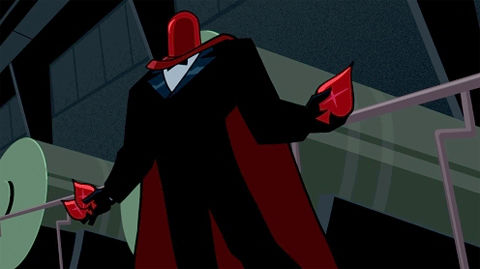
            I guess, the best place to start with the character known as the Arkham Knight’s story problems is with his name. What a bizarre and unnecessary choice it was to not just call him by his comic-book name – Red Hood. While Red Hood is a significant character in the Batman comics, he is not a widely known one. If they had referred to Arkham Knight as Red Hood in the game he would have been just as mysterious and as much of an unknown to the majority of players. For those like myself who did know the Red Hood’s identity prior to playing the game it is painfully obvious from your first interaction with the Arkham Knight that he is the same guy as Red Hood – Jason Todd. The only thing that kept a 1% doubt in my mind when playing was that Rocksteady had stated Arkham Knight was a completely original character.

Ever since the first trailer Arkham Knight had evoked thoughts of Red Hood, but I doubted it until release because I wanted to trust Rocksteady’s word. That doubt would have been put to rest prior to release if I paid attention to one of the game’s pre-order bonuses. In what I consider to be a major marketing and planning error they made a pre-order bonus a mission where you can play as Red Hood. Gee, I wonder why he is in the series all of a sudden when there is a character just like him called Arkham Knight in all the trailers?


Going back to what made the Arkham Knight’s identity so obvious in that first encounter, aside from the fact that he has the same physical build, moves, weapons and knowledge that Red Hood has. When you first encounter Arkham Knight he speaks with a faint voice modulator that implies his voice is being masked, but it’s not really changing the voice at all. You can totally tell that the voice actor is Troy Baker. In that moment I thought it was pretty obvious they had lied. This imparted to me that the modulator is for Batman and not me – as if it was for me I wouldn’t be able to recognize the voice and if it wasn’t for Batman it wouldn’t be there – meaning Batman knows Arkham Knight, meaning it’s Jason Todd A.K.A. Red Hood. If you didn’t catch on right away or even beforehand who the Arkham Knight was, then you might figure it out from the Jason Todd torture scenes. In them you can hear his voice, the voice of Troy Baker – arguably the most recognizable voice in video games alongside Nolan North. They had the right idea with a voice modulator; they should have actually made Troy’s voice unrecognizable when he is Arkham Knight.

In addition to the fact that the name and costume change up for Red Hood was unnecessary and poorly handled, they didn’t even make the mystery of the Arkham Knight’s identity interesting from a story telling perspective for those who didn’t know. The game never asks you to use your detective mode and/or wits to solve mysteries in an attempt to narrow down the possible suspects, and no red herrings or alternative avenues of investigation are used. All that happens is a couple of times Batman gives Alfred some parameters to narrow down Alfred’s search for who the Red Hood is, like check recently released criminals and cross reference with those that have military training. The results are never shown to you so that you might engage with the mystery that is supposed to be one of the biggest elements of the game’s story. The experience is completely passive, which – in case it wasn’t obvious – is not the way you should do things in an interactive experience. The only thing that could possibly throw you off the trail or make it less obvious is unintentional and that’s Two-Face. Two-Face is once again played by Troy Baker, so you could do his side quest and think that they are just reusing actors, making the fact that Arkham Knight & Jason Todd have the same voice seem like a mere coincidence. After all, Two-Face has that same voice and he can’t be the Arkham Knight because he doesn’t fit the bill at all and is dealt with in a side quest.


            Not only should Arkham Knight have been Red Hood simply because that’s who the character is and the attempt to hide that was horribly executed, it works better from a story standpoint as Red Hood. Batman fighting someone who looks like himself sort of falls into the popular trope of a hero fighting a dark version of himself, but that’s not very interesting or ever explored and the costume’s similarities to Batman posses problems. For Jason Todd, a former Robin, to grow up and design a costume similar to Batman’s makes sense. That is, if that former Robin is still a good guy. Do the villains of Gotham really want to work with a guy dressed like Batman? Typically, dressing up like a hero speaks to an idealization of and desire to be that hero or at least like that hero. If I were a villain, I wouldn’t want to work with a guy who wants to be like Batman. In the comic “Batman: Battle For The Cowl” Jason Todd dresses up like Batman, but the story doesn’t feature him trying to kill Batman. Instead, it features Jason trying to take up the mantle of Batman and be a better one than Bruce ever was following Bruce’s death. When you take all of that into account it doesn’t make much sense that in a story where Jason only wants to destroy Batman at any cost he would choose to dress like him.


Now, as for the Red Hood costume the reasoning is the same as in the comic. The Joker dawned the costume of the Red Hood prior to the accident that turned him from a normal man into The Joker. Batman is responsible for that accident. Jason’s return as the Red Hood acts as a reminder of Batman’s greatest failure – the one that created the Joker – and it is being worn by his second greatest failure – Jason Todd –, a sidekick whom he failed to save. Making Jason Red Hood deals with the villain trust problem as they would have no reason to take issue with Red Hood’s costume, since no one outside of the Bat Family & Joker know that he was originally Red Hood. Even if they did, dressing up like a villain should be acceptable to villains. What’s more important, however, is the costume’s impact on the story and themes of the game. In a tale that takes place after Joker’s death, in which Batman is hallucinating Joker’s ghost, the fact that someone would show up with a persona that is an homage to The Joker further extends the idea of Joker not being fully gone and still haunting Batman. It also further pushes the connection between Batman, Jason and Joker, which is of particular importance as this series that is all about Batman and Joker. Connecting them more closely makes Jason more relevant and brings him into the crux of the series, where as he is currently only tangentially tied to it. Not to mention, Joker’s origins as Red Hood were already established and given a focus in “Batman: Arkham Origins”; bringing Jason in as Red Hood would help bring things full circle. You also can’t dismiss the story of “Arkham Origins” just because it wasn’t Rocksteady, since it establishes the beginning of Batman’s relationships with Joker, James Gordon and Barbara Gordon all of which are important parts of story in “Batman: Arkham Knight”. Why not have it set up Jason Todd as well?


Then we have Jason Todd’s reveal. Troy Baker did a good job of conveying Jason’s pain, but the script didn’t bother to flesh out this important interaction between Batman and his former protégée, now turned killer. A big issue I had was that he never explains his motives or attempts to justify his actions. We are supposed to accept that because the Joker tortured him and messed with his head his actions make sense, but they don’t. He wasn’t brain washed or indoctrinated to the point of becoming loyal to Joker or wanting to follow in his footsteps. Jason clearly became disillusioned with, and grew to hate, Batman for not saving him from Joker. It is possible he never went after the Joker himself out of fear, but to go after Batman now and in the way he did doesn’t make sense. And I’m not referring to the use of unmanned tanks, which was like pulling out a regular rock on Superman while claiming to have found his weakness. In the comics, Jason Todd hates criminals. He sees Batman’s no kill rule as a weakness, an unwillingness to do what is necessary to protect people and stop criminals. If Batman had simply killed Joker during one of the many times in which Batman defeated him, Jason would have been spared. There is a great interaction between Jason and Batman in the movie “Batman: Under the Red Hood” where Jason says he thought that if there ever was a crime that would cause Batman to kill Joker, surely it would have been murdering Robin and you can see it pains Jason that Batman didn’t avenge him. You don’t get anything like that in “Arkham Knight”. Instead you get a hero who was a victim of a villain who decides he has no problem teaming up with villains and killing countless innocents, all to hurt Batman. He doesn’t even say that he intends to turn against and kill Scarecrow and the others when it is over or that he has been trying to minimize the damage they have been causing. For instance, they could have said he convinced Scarecrow to give the warning that caused the evacuation in the hope for less casualties.


On top of all of that, he avoids the biggest elephant in the room; the one thing that makes “Batman: Arkham Knight” different from any other Red Hood introductions: The Joker is dead. Not only is Joker dead, but he died fighting Batman. No one knows the full story, but as you can overhear from thugs around Gotham, it is presumed that Batman killed Joker. Why doesn’t Arkham Knight bring that up? Why doesn’t he ask Batman what made him finally stop Joker for good, since his own presumed death clearly wasn’t motive enough? Or, had Arkham Knight been depicted more in line with traditional Red Hood stories, he could have been a murderous vigilante and used Batman killing Joker as a way to say that Batman can’t judge him because they are the same. Jason could be happy that Batman finally gets what needs to be done, maybe now they can be a team again and truly clean up Gotham and that is why he returned. I think having Batman’s story end on a tale that brought up whether his methods work or just perpetuate a cycle by showing Jason’s alternative methods and philosophy behind them would have been good. With the Joker infection making Batman more violent and potentially homicidal, it would have been interesting to have an old friend nudging him in that direction and providing him with incentive as resisting the Joker infection would mean fighting his friend and going along with it would mean working with him again. It also would have been interesting in any version of the story to have Jason learn that Batman is turning into Joker and see how he deals with that. For instance, if Jason was an anti-hero rather than a villain he could have become an antagonist with a clear and understandable motivation; as he only decides to try to kill Batman to stop him from becoming the Joker. Jason’s story was a great one to try and bring in to the conclusion of this series, but it was utterly wasted. 


The earliest point in this series’ storyline, “Arkham Origins”, is the beginning of Batman as not just a vigilante, but as Gotham’s hero.  It’s the first time he is captured on camera and shown to the world as well as the point where he earns the trust of Jim Gordon and to an extent the GCPD. This is the last story we experience before “Batman: Arkham Knight”, which is about the end of Batman. The Joker, Batman’s greatest villain, was created because of a mistake Batman made prior to Arkham Origins – prior to being a hero. Jason Todd was captured by Joker and has now turned into the villain known as Arkham Knight because of a failure on Batman’s part while he was a hero. Because Joker is responsible for Jason’s downfall, this second failure can be seen as a reverberation from Batman’s first one. For Batman to face Jason and try to not just beat him up, but fix him is a test for how far he has come. At the end of his journey as a hero, is he able to save Jason when he couldn’t before? Is he able to undue the darkness in Jason that he is responsible for, like he wasn’t ever able to do with Joker? As a hero, can he stop the rippling consequences that are still going from that mistake he made before he was one? Batman has always been driven by his inability to go back and make things right – his inability to save his parents. That is why he dedicates himself to trying to prevent others from facing the fate that he did. At the end of Batman’s journey can he finally not just be a bandage that stops the blood from spilling for a time before falling off – as those he puts away get back on the street –, but a cure that heals the wound – changes someone from bad to good? Can he be a force for rehabilitation rather than punishment, something Arkham Asylum could never succeed at? These are the sort of questions and ideas “Batman: Arkham Knight” should have gone for with Jason Todd’s return. Instead they settled for throwing him in because he hasn’t been used yet and he knows Batman’s identity. You would think the latter of the two is important because Batman’s identity is revealed in this game, but Arkham Knight doesn’t end up having anything to do with that. Like I said, Rocksteady wasted the opportunity for a great story with Jason Todd.

Thursday, 28 January 2016

Review: Batman Arkham Knight


The Arkham games have been one of my favorite series to crop up over the last decade. Arkham Asylum marked the first time I thought a 3D superhero game was great and as a massive fan of both superheroes and Batman in particular it was an awesome and unexpected treat. Things are a little different now, expectations have been high for each Arkham game since Asylum and developer Rocksteady has made a big deal about ending this great series with a bang. And while there certainly were some bangs, I couldn’t help but hear a lot of whimpers too.


            When Arkham Asylum came out six years ago it was a special game. The main reason for this was that Rocksteady had managed to design systems around all of Batman’s greatest aspects – his fighting, sneaking and detective skills – and blend them together in a way that made the whole greater than the sum of its parts. That whole was Batman, and because of it we as fans got to feel like one of the greatest and most beloved fictional characters of all time. In Arkham Knight Rocksteady tried to incorporate one last aspect of being Batman into the experience. That aspect was the Batmobile. Regrettably, that aspect is Arkham Knight’s greatest weakness. If Rocksteady had simply treated the Batmobile as just another gadget – factoring it into a few new puzzles – which you could also use to get around the city faster then things would have been fine. Instead they make you spend about half the game inside the Batmobile, usually engaging in tank battles that have nothing to do with what it means to be Batman. Even when you aren’t in tank battles you are doing things like chasing armored vehicles and firing homing missiles at them or using it to breakdown walls, something we’ve already done and sometimes still do with the explosive gel gadget. Pretty much the only times you are using the Batmobile to solve puzzles in new and interesting ways are in some of the Riddler challenges, but most of those are just race tracks. The game is called Batman, not Batmobile, and whenever you are in the Batmobile you don’t feel like Batman. Instead you feel like a weird rocket propelled tank.


            When you actually are playing as Batman there's a few interesting new additions to gameplay, basically one for each gameplay pillar: combat, stealth and puzzle solving. First and foremost is the Fear Takedown system, which allows you to take out a group of unsuspecting enemies (up to five with upgrades) with great speed and ease. It allows for stealth sections to include more enemies and offers up a great way to enter into big fights, if you can approach unseen. The way the camera speeds up, whips around and then slows just to speed up again after you select your next target was really uncomfortable to look at the first handful of times. Eventually, I did get used to it. Another addition is the ability to pick up weapons like a bat or steel pipe that enemies drop and use it against them. It works just like the Shock Gloves from Arkham Origins, meaning it lets you damage anyone – whether they have armor or stun batons or riot shields – just like if they were the basic enemy type. The weapons break quickly though, so it isn’t nearly as overpowered as the Shock Gloves were. It can come in handy, but I found myself almost never making use of this feature as it isn’t needed to win the fights. Besides, when was the last time you saw Batman use a Baseball bat against a criminal? He’s not Casey Jones. For the investigative sections of gameplay, Detective Mode offers nothing new. However, there is an interesting new type of puzzle in the game. It involves you searching through footage from a group of cameras in order to track and locate a piece of information. Unfortunately, you only get to do this type of puzzle twice. There is one last gameplay addition, and it is the one that was the most surprising and intriguing: tag team combat.


            The Arkham campaigns have always been single player only and Arkham Knight is no different. So, to have two heroes like Batman & Nightwing fight a group of enemies together you control one while the AI controls the other until you press the Left Bumper and instantly swap control with the AI. There is also a meter that you can build up in order to perform a dual takedown that will instantly neutralize anyone you are fighting, and switch your control over to the other character. Despite the simplicity of the tag controls you never fight with more than one ally, even though there are a total of three in the game. While it is undoubtedly cool to fight with Nightwing or Catwoman or Robin alongside Batman, the characters don’t feel that different. Their animations are different, but the combat is the same except for the fact that none of them have useful gadgets. It’s not surprising though, why make a bunch of unique quick-fire gadgets for such brief and infrequent team-up fights? Heck, there is only one section in the main quest line where it occurs. Aside from Catwoman climbing on walls for brief parts of Riddler challenges you never explore what makes these other heroes unique. It would have been nice if you could choose to do side quests as them simply for the heck of it, but since you can’t they end up being a flashy inclusion for a few fights and nothing more.


            You can’t even use Robin, Catwoman & Nightwing in any of the game’s AR challenges. The AR challenges are Arkham Knights lack luster replacement for Challenge Maps. The biggest problem with the AR challenges is that there are so few of them, especially in terms of ones that feature Batman’s combat and stealth. Out of the twenty-three challenges, fifteen of them feature the Batmobile. The other eight are split up evenly between combat and stealth missions. Of those four combat missions: two feature Batman, one features Azrael, and one is a tag battle with Batman & Nightwing. There is no good reason why you can’t choose to get a little more out of these four short combat challenges by playing as your choice of: Batman, Catwoman, Nightwing, Robin or Azrael. Especially when Azrael is literally just a reskinned Batman, right down to every animation and gadget. In the story they explain it by saying Azrael has been studying Batman to become his replacement.


            The AR challenges aren’t the only part of the game that feel like an after thought. The game only has a few boss fights and none of them are all that good. Although, to be honest, I never did the Riddler boss fight because it was locked away behind 243 tedious and annoying Riddler trophies. Quite frankly, I don’t have high hopes for that boss fight based on the others in the game. Even if it was the best boss fight in the entire series, I would rather it didn’t exist than have to spend all those hours getting those trophies to play it. Ironically, what’s even worse than the lack of boss fights is the large quantity of repetitive and recycled side quests. Almost every side quest is comprised of just asking you to do the same thing again and again, often to a ridiculous extent. For instance, the Firefly side missions ask you to follow Firefly around in the Batmobile until a meter builds up and Batman automatically jumps out and grabs him. Each time it starts and ends with identical cutscenes; except for the last one, which features Batman arresting Firefly. Then there are side quests like taking control of twenty-one guard towers or rescuing sixteen firefighters – each of which is surrounded by a group of thugs for you to beat up. As soon as you have completed the first part of any sidequest you have basically done all it has to offer, with the ten Riddler Trials being the only real exception. The worst part was after completing 64 specific villain-less side tasks a boss battle is unlocked that is just a copy of a boss fight from the main quest with a new villain subbing in. The side missions feel like a lazy attempt to pad time.


            Arkham Knight’s greatest strength is its presentation. The graphics in Arkham Knight are stunning; the nearly constant rain falling and sliding down Batman’s costume – most notably his mask and cape – coupled with the illumination provided by things like bright neon signs make for some great visual touches. However, there are points where particles other than rain are falling and some of them have the jarring tendency to move right through characters. The game’s presentation values don’t stop there though. The way the game plays with how it stages and presents moments in the story by doing things like changing the environment as you pan your camera is great. It also works wonders for all of Batman’s hallucinating in the game. The open world nature of Arkham Knight can break the flow of the narrative as you go off and do less pressing tasks when story wise you should be continuing with the main quest. It’s not as bad as it was in Arkham City though, and things like billboards changing randomly as you go around the city as well as other hallucinations keep the main narrative present in your mind.


In fact the way they present the story visually is so masterful that it manages to largely hide how ridiculously flawed the story of the game is and how poorly some of the major characters where represented. To prevent spoiling anything I won’t go into too much detail, but the story of the Arkham Knight for instance was really predictable. They never presented any red herrings or misdirects for who the Arkham Knight might be, despite it being a big mystery to the world’s greatest detective for almost the entire game. There is also another massive story thread that for me was the highlight of the game, but is founded on a complete misunderstanding of an integral character. I found myself having to try and over look how stupid the set up was and the fact that there was a much better way to do it, simply because they did get to some cool stuff with it – all of which still could have been done if they had set it up properly. The story was somewhat uneven in terms of delivering emotionally, but the performances were a huge step up from the phoned in disaster that was Arkham City. Arkham Knight’s story did seem like it was delivering a good sense of closure for the series; right up until it spoiled that by saying I can’t unlock the ending until I do more side missions and then that I can’t unlock the “true ending” until I do all side missions, including finding all the Riddler trophies. I watched the “true ending” online and wasn’t at all impressed.


            Arkham Knight had the potential to be the best Batman game yet and ended up being the worst major entry in the Arkham series. This occurred because the game fell short in everyway outside of its presentation. The story has some great moments – due far more to the way the game presents the scenes than to the story itself –, but overall was horribly mishandled. The boss fights are lacking in quantity and quality, the side missions are hugely repetitive, there are too few AR challenges, fighting as a team is an under utilized feature and lastly, you are left wanting more time as Batman – as well as other heroes – since you spend so much of the game as the Batmobile. Arkham Knight is still a good game, but perhaps if Rocksteady hadn’t focused so much on making their next generation vision of Gotham look so amazing they could have filled that gorgeous city with fun things to do. Also maybe they could have kept their lead writer from Asylum & City or hired the lead from Origins so the story made sense. At the end of the day it’s what’s under the mask that matters most, even on new hardware.


Score: 3/5

Saturday, 14 February 2015

My 10 Favorite Villains Of The Last Generation (Xbox 360, PS3, Wii)

There is something really special about a great villain. A great villain can provide insight into heroes and worlds, they expose you to other moral codes and viewpoints and they motivate your actions as a player to find some way to stop or overcome them. Despite the fact that we are constantly battling enemies in videogames, truly enjoyable villains are exceedingly rare. That is why I wanted to take the time to look back at those from this past generation that I felt got it right. Now before we get into the list itself there are a few ground rules I want to layout.

1. My opinions of the villains in this list must be solely based on their depictions in games from this generation. Being a storied villain with a bunch of prior appearances is not a bonus. A classic villain can’t just show up again and ride the coattails of past success, the only way to earn a spot on this list is by being awesome in this most recently past generation. 

2. Villains who are cool or interesting because they were evil and then turned good or vise versa can only be thought of for their time as a villain.

3. Villains who originated in another medium are disqualified because this list is supposed to celebrate Videogames. 

4. I am focusing exclusively on individuals and not groups, so something like the Locust from Gears of War cannot qualify, but their leader Queen Myrrah does. 

5. I like these villains for many different reasons and ranking them seems a little weird and impractical so this list is in no particular order. Now that we’ve covered all of that let’s get to the first villain.

*Major Spoiler Warning for every game with a villain on this list*


Sovereign


Game: Mass Effect
Developed by: Bioware
Published by: Microsoft Game Studios


         The Reapers as a group are a great overarching enemy for the Mass Effect trilogy, but one of the reasons for that is how compelling Sovereign was in the original Mass Effect. That first interaction with Sovereign where you figure out that he is not just Saren’s ship, but rather some sort of ancient, fully sentient machine that describes itself in a god-like way (stating that it has no beginning, no end and is completely beyond your understanding) was a twist I did not see coming. Sovereign then delivers the chilling message that all the races in the galaxy have been wrong about the Protheans and the Mass Relays, for you all have been strung along by unseen forces just so that Sovereign and his kind could exterminate you all at your evolutionary peak. On top of that Sovereign was slowly infecting the mind of the primary antagonist Saren and single-handedly almost wiped out the whole alliance armada stationed at the Citadel in an attempt to bring back the Reaper army. Sovereign may not have been in the series, or even the first game, for very long, but he made a hell of an impression that never went away.


Chakravartin


Game: Asura’s Wrath
Developed by: CyberConnect2
Published by: Capcom


         After Asura’s first death (yeah that’s right he dies more than once) near the beginning of the game he eventually awakens in another realm called Naraka. There, The Golden Spider finds him and encourages him to return to the land of the living. The Golden Spider occasionally acts as guide and motivator to Asura, but then at the end of the game he betrays you and possesses Asura’s daughter Mithra. This comes right after having just spent the entire game trying to save her. In the downloadable add-on for the game that continues the story you get to battle against The Golden Spider, now known as Chakravartin. Chakravartin tells you that he created everything: the world, your race, the Gohma (monsters you fight), Mantra (the magical energy you use), and more. He did all of this to eventually produce a being powerful enough to rule over this section of the universe in his stead. You end up having an incredibly climactic battle through space and into Nirvana against a being that may actually be God. A lot of times one of the things that makes a villain stand out is the immense power they posses and this is because of the challenge it presents for the hero. In that particular regard I don’t think there has ever been a videogame villain as good as Chakravartin, as I can’t think of a greater challenge.


Caius Ballad


Game: Final Fantasy XIII-2
Developed by: Square Enix
Published by: Square Enix


         What makes Caius such a great villain is the tragic nature of his motives. Caius can live forever, but Yeul (the person he cares most about and is charged with protecting) cannot. Instead Yeul is constantly reborn after she dies. This leads to Caius spending centuries watching Yeul live a short life (her gift/curse of seeing the future takes a large toll on her) then dying, then being reincarnated just to die young again. Caius wants to free her from this endless cycle of death, so he sets out to kill the Goddess Etro. Doing this will end reality as we know it and turn it into a realm without life or death or even time, where instead you simply are. It is a strange thing to try and wrap my head around, but seeing how he is driven by the desire to save the person who matters the most to him rather than out of some thirst for power or just because he is evil made him compelling to me. There is also something about his personality and how he carries himself where he never comes off as maniacal like so many other villains who are out to destroy the world and is much more calm and determined. Lastly in the end of Final Fantasy XIII-2 Caius wins. He unleashes Chaos upon reality, and the game says: “to be continued”. I haven’t played Lightning Returns Final Fantasy XIII yet, where you get to see some more of Caius, but based on XIII-2 alone he is one of favorite villains of this past generation.


Kai Leng


Game: Mass Effect 3
Developed by: Bioware
Published by: Electronic Arts

         Throughout Mass Effect 3 there is quite a bit for Shepard and his/her crew to worry about. The biggest threat in the game are the Reapers, but you rarely deal with them up close. The other major threat is the organization known as Cerberus, lead by The Illusive Man. While The Illusive Man is commanding his army of Cerberus soldiers and making plans, Kai Leng is the one with his boots on the ground leading the charge. Kai Leng was an interesting new character as he was the antithesis of Shepard. The fact that Shepard worked with Cerberus in Mass Effect 2 sets up common ground between you and Kai Leng, but these characters then take diverging paths that set them on a collision course with one another. Shepard chose to forge his/her own path, even if it meant going up against Cerberus. Kai Leng, on the other hand, is completely loyal to Cerberus and follows the orders he is given. It is important to remember that the Mass Effect series is built on choice and so Kai Leng just doing as he is told not only makes him the opposite of Shepard, it puts him in willful defiance of one of the fundamental principles that Mass Effect is based upon.

Despite the fact that Shepard has chosen to go against Cerberus The Illusive Man values and respects him more than he does Kai Leng. With Kai Leng being so devoted to the cause this naturally instills anger and jealousy in him towards Shepard. Shepard and Kai Leng are also quite possibly the greatest warriors to ever work for Cerberus, so Kai Leng wants to beat you in an attempt to prove his worth to The Illusive Man; to prove that he is the best and that Cerberus has no need for Shepard. And beat you he does. The reason I feel like Kai Leng belongs on this list is because of how much he made me want to kick his ass. First he kills Thane right in front of me, then he nearly kills my squad and I in addition to stealing the Prothean Virtual Intelligence that can tell me how to save the galaxy and then to twist the knife he sends me a message about how the planet of Thessia is falling to the Reapers because I lost to him. There isn’t a villain on this list that earned my unadulterated resentment to the extent that Kai Leng did.

Albert Wesker


Game: Resident Evil 5
Developed by: Capcom
Published by: Capcom

         Wesker has three classic traits of a great villain: he has the ambition to try and takeover/destroy the world, he has far more power than the hero (or anyone else), and he has a history with the hero that makes things personal. In a way this may make Wesker sound cheesy or clichéd, but these traits are familiar for a reason and that is that they work well for the foundation of a villain. The way Resident Evil 5 builds from this foundation though is why I’m such a fan of Wesker. The feeling that you are always one step behind Wesker and cross paths with him multiple times keeps him ever-present at the forefront of your mind as opposed to a distant goal for you to only worry about near the end of the game. The reveal that he didn’t actually murder Jill (which was why things were personal), but instead had made her into his mind-controlled slave (and things are personal again) was a fun twist. Then there is the fact that Wesker doesn’t want your character Chris dead as badly as Chris wants him dead because Wesker prefers to keep toying with Chris. His ruthlessness coupled with his over inflated ego gives him a larger than life personality and presence that, luckily, never felt silly. Lastly, there are the multiple boss battles with him. One of them is especially interesting as it changes up the dynamic of the game a little, as you have to keep running and hiding from Wesker because he is too fast and powerful to battle head on.

*TIME OUT*

         It occurs to me that it might actually seem a little strange that this is the first time I’ve specifically called out a boss battle in a list of videogame villains, almost all of whom you eventually have at least one boss battle with (Sovereign being the exception). I want to take this opportunity to note that in the interactive medium that is Videogames the way you as a player interact with the villain matters. For instance Kai Leng beating Shepard on Thessia hurts more because I got to battle him just prior to the cutscene where he beats my team and I. The thing is that boss battles are somewhat of a given, so having something that draws you in beyond that is what can make for a standout villain. Chakravartin though is on this list because of the epic scale of your battle with him, which is almost entirely playable through combat sections and quick-time events. If I had no playable interaction with the character and just watched some cutscenes that had some spectacular action in them I wouldn’t like him nearly as much. The boss battle is typically the culmination of your hero and villain’s story together so it is a special thing and helps provide finality for the villain. With that said, this list is focused on the character or essence of these villains and the impression they left me with as a player. The boss battles contributed to that, but in the same way that most boss battles do. To warrant mentioning here they really have to go above and beyond or stand apart from the rest of the game in a unique way like the first battle with Wesker did. A list of my ten favorite bosses would look quite different from this one, as it would be entirely influenced by the quality of the gameplay and the uniqueness or challenge of the encounter.

*TIME IN*

Augus


Game: Asura’s Wrath
Developed by: CyberConnect2
Published by: Capcom

         I found Augus to be a surprisingly interesting and very likeable villain. Despite being one of the self pro-claimed seven deities you are battling against and helping the rest of Asura’s enemies to accomplish their goal he doesn’t care about them or their plans. All Augus cares about is fighting. He has no goal or motivation outside of fighting things and testing his limits. To quote him “I don’t fight for good and I don’t fight for evil. I just fight.” He loves every moment of combat as shown by his laughter and constant smile. Even in defeat he holds nothing against Asura and encourages him to continue on his quest to defeat the seven deities. He does this not because he has any ill will towards them or that he truly understands why Asura fights against them, but simply because he believes that everyone must choose their own path and in the end the one left standing will have earned it. Plus when you throw in that he took you to a hot spring to drink before you two would fight to the death, his cool character design, his sword being able to grow longer than the Earth and that he once flipped an elephant with his thumb like a coin how can you not like him?

Shadar


Game: Ni No Kuni: Wrath of the White Witch
Developed by: Level-5
Published by: Namco Bandai

         Shadar is an interesting villain because while he is not the mastermind behind the evil going on in the world he is the face of it. Ni No Kuni spells out in its subtitle that the main villain is The White Witch. You see The White Witch in cutscenes every now and then starting really early on as she gives Shadar orders, but the heroes of the story are completely unaware of her existence for the vast majority of the game. They think that Shadar is behind everything when he is just following a more powerful villain’s orders. With that said, Shadar is the one who is actually doing the terrible things to people in this world and who your characters are all working to stop, thus making Shadar the one who is at the forefront of your mind. Because the world’s inhabitants kept describing Shadar as pure evil and immensely powerful it always seemed strange to me that he was subservient to someone else. This combined with the way he interacted with The White Witch and how some members of her council expressed distrust in him gave Shadar a level of intrigue, and planted the idea in me that he had some scheme up his sleeve to betray his master. Disappointingly, this ends up not being the case. However, we do get an interesting connection between Shadar and your main hero Oliver when we learn that their souls are intertwined and an interesting and understandable backstory that shows how Shadar came to be how he is. I also learned while looking up info on this game that it was originally released on the DS and in that version The White Witch does not exist and Shadar is the sole antagonist, which explains why I liked him more and why he was the game’s primary villain focus.

Vamp


Game: Metal Gear Solid 4: Guns of the Patriots
Developed by: Kojima Productions
Published by: Konami

         I might as well be straight with you; when making this list I figured Vamp would be on it entirely because of how badass he is in cutscenes. There is nothing overly compelling about him as a person and I liked him well before learning of his past and how he got his healing ability near the end of the game. Vamp is just an incredibly lethal and sadistic fighter who is seemingly immortal and has an incredible battle with Raiden during one cutscene, plus an encore that I desperately wanted to look at on one side of the screen (you can only sneak peeks because you have to play the game and fight for survival on the other side). But when I thought about what I would write for him on this list it dawned on me that Vamp isn’t on this list entirely because of how badass he was in those scenes. There is something else about him that helped draw me in.

It is the mystery around Vamp and the uneasiness that comes from his presence in the world. Metal Gear Solid is about tactical espionage action; it is about spies, politics and conspiracies. The series may have some weird or zany moments and it definitely goes into the realm of science fiction, but all of its fiction is grounded in a sense of reality. Why then is there an unkillable monster of a man who calls himself Vamp, which is obviously short for Vampire? Vamp’s very existence in this game world makes you question possibilities about what can and cannot exist within it in addition to causing you to doubt if there is anything your character Solid Snake can do about a being like him. Vamp represents the supernatural in a sci-fi world where he doesn’t belong and because of that there is no telling how many other things like him might be hiding in the shadows. This elevates Vamp beyond the position of just some cool dude who shows up and has a really impressive cutscene. These two aspects: the mystery surrounding his presence and his incredible fighting ability, feed into one another. Vamp becomes more badass because he is an unknown quantity, and the fact that he shouldn’t exist is made more impactful and striking because he is so dangerous and (as I keep putting it) badass. This is truly, and entirely, why I had to put him on this list of mine.

Nene


Game: Blue Dragon
Developed by: Mistwalker
Published by: Microsoft Game Studios

         Nene was cruel and sadistic and epic. He was a terror to the entire world and he loved it. He derived joy from encasing all the citizens in a town within ice or sending machines to simply slaughter a village. Nene’s incredible power and fiendish nature often reminded me of Frieza from Dragon Ball Z. Now I still prefer Frieza (he is one of my favorite villains in any medium) whom you get to see interact with heroes more and who does more heinous things, but Nene is like a Frieza at 70% villainy and in my mind that still makes him more than twice as good as the majority of villains. I also have to give him praise for manipulating the heroes of Blue Dragon for so long that more than halfway through the game all you had really manage to do was help him. For those unfamiliar, this was because Nene had secretly been behind giving the heroes their shadow magic just so that they could train with it and grow it. He wanted that to happen so that he could then absorb their magic and repair his failing body, which he does. The fact that he was not just this sort of personification of evil who was immensely powerful, but was also much smarter than you and had been playing you all along was great.

Saren


Game: Mass Effect
Developed by: Bioware
Published by: Microsoft Game Studios

         This list is no stranger to Mass Effect villains, but I have saved my favorite of them for last. Saren was skilled, intelligent and proud; he was the best of the elite group of soldiers known as Spectres. Your character, Shepard, is granted the rank of Spectre so that he/she can hunt down Saren, who has gone rouge, and bring him to justice. One of the great things about Saren is that he is doing what he believes is right not just for himself: but for all species in the galaxy. He learns from Sovereign about what the Reapers have done to organic species in the past and decides that being their loyal and useful followers is the only method of survival possible. Unfortunately for Saren, Sovereign slowly corrupts his mind through its power of Indoctrination. Using this ability Sovereign takes Saren’s values and manipulates them slowly over time in such a way that he is unaware of any changes in his thoughts or behavior. This leads to Saren believing that organics must instead merge with machines, rather than work for them, in order to survive, which is what Sovereign wants as it gives the Reapers full control.

Saren was smart enough to be concerned about Indoctrination and even built a lab to study it out of fear that he may be corrupted. It was because he was aware of his limitations and the danger of working with Sovereign, as opposed to being so arrogant as to think that he is beyond Sovereign’s control like so many other fictional villains who get corrupted by a dark force, that you are able to break through to him in the end and convince him that he has fallen victim to Sovereign’s Indoctrination. This was a remarkable moment for me in Mass Effect as what I chose to say convinced Saren, the main antagonist, to finally see the truth, which in turn causes him to take his own life (if you don’t get through to him you actually have to kill him yourself in a boss battle) so that he will no longer be Sovereign’s pawn. Seeing Saren attempt to atone for his sins in that way was an unforgettable moment and really turned him from great villain to incredible tragic villain. It is interesting how Bioware likes to use a lack of the ability to choose as an element in its Mass Effect villains and how giving that ability back to Saren proved to be such a mind-blowing experience for me.

Batman: Arkham Knight Critique - Joker Story

The most compelling aspect of the story in “Batman: Arkham Knight” for me was Batman’s ongoing hallucinations of The Joker. I had heard...